ISA Certified Arborist RM-8846A
Emerald Ash Borer Treatment for Ash Trees in Boulder, Colorado
Boulder is where EAB was first found in Colorado. If you own an ash, it needs a decision: treat it or plan its removal.
Short answer
Every untreated ash tree in Boulder will eventually be killed by emerald ash borer, so ash ownership here is a choice between committing to ongoing preventive treatment or planning a removal and replacement on your own schedule instead of after the tree dies.
Boulder is the origin point for this pest in Colorado. Boulder Forestry staff detected emerald ash borer in the city in September 2013, the first confirmed detection in the state. The insect is a metallic green beetle whose larvae tunnel under the bark and cut off the tree's ability to move water and nutrients, which is why an infested ash declines quickly rather than gradually.
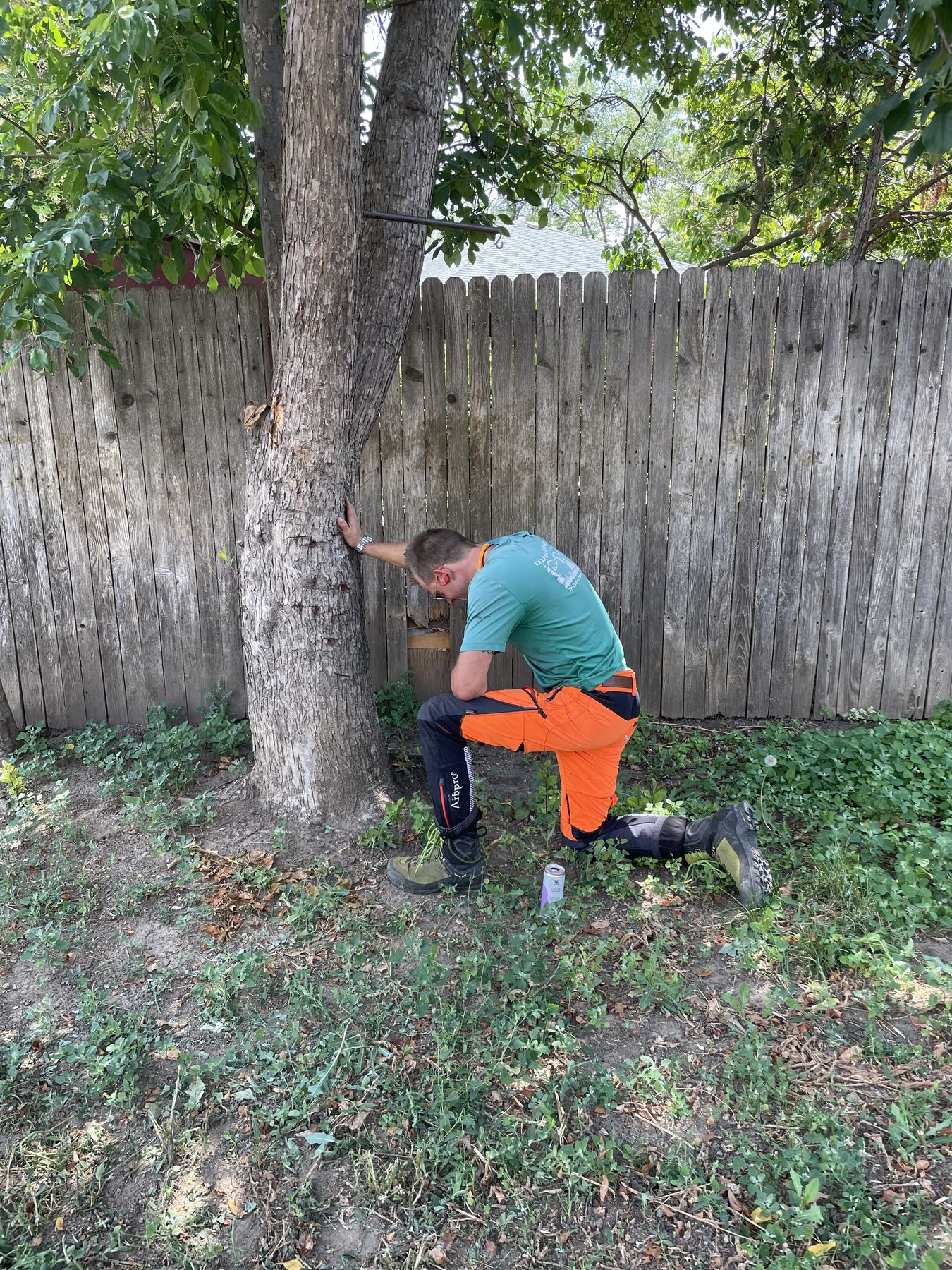
The City is direct about the outlook: all sizes of ash in Boulder, including very healthy ones, will eventually be killed unless treated with an effective pesticide. Green, white, black, and blue ash are all susceptible, along with cultivars like Autumn Purple white ash. Those species were planted heavily as shade trees across Front Range neighborhoods, which is why the loss has been so visible.
For public trees, the City runs roughly 1,300 ash on a treatment program, split into three groups and injected with emamectin benzoate on a three-year rotation, a program that began in spring 2014. Private ash trees are the property owner's responsibility, and the City recommends hiring only a licensed certified arborist to prune, remove, or apply pesticide to them.
For a private ash the decision comes down to the tree. A structurally sound ash in good condition, in a spot where its shade genuinely matters, is usually worth treating, and treatment is inexpensive relative to removal and replacement. An ash in poor condition, in a poor location, or already well into decline is usually better removed while it is still safe to climb and while removal is still straightforward.
What does this service include?
- Ash identification Confirming you actually have an ash before any decision is made.
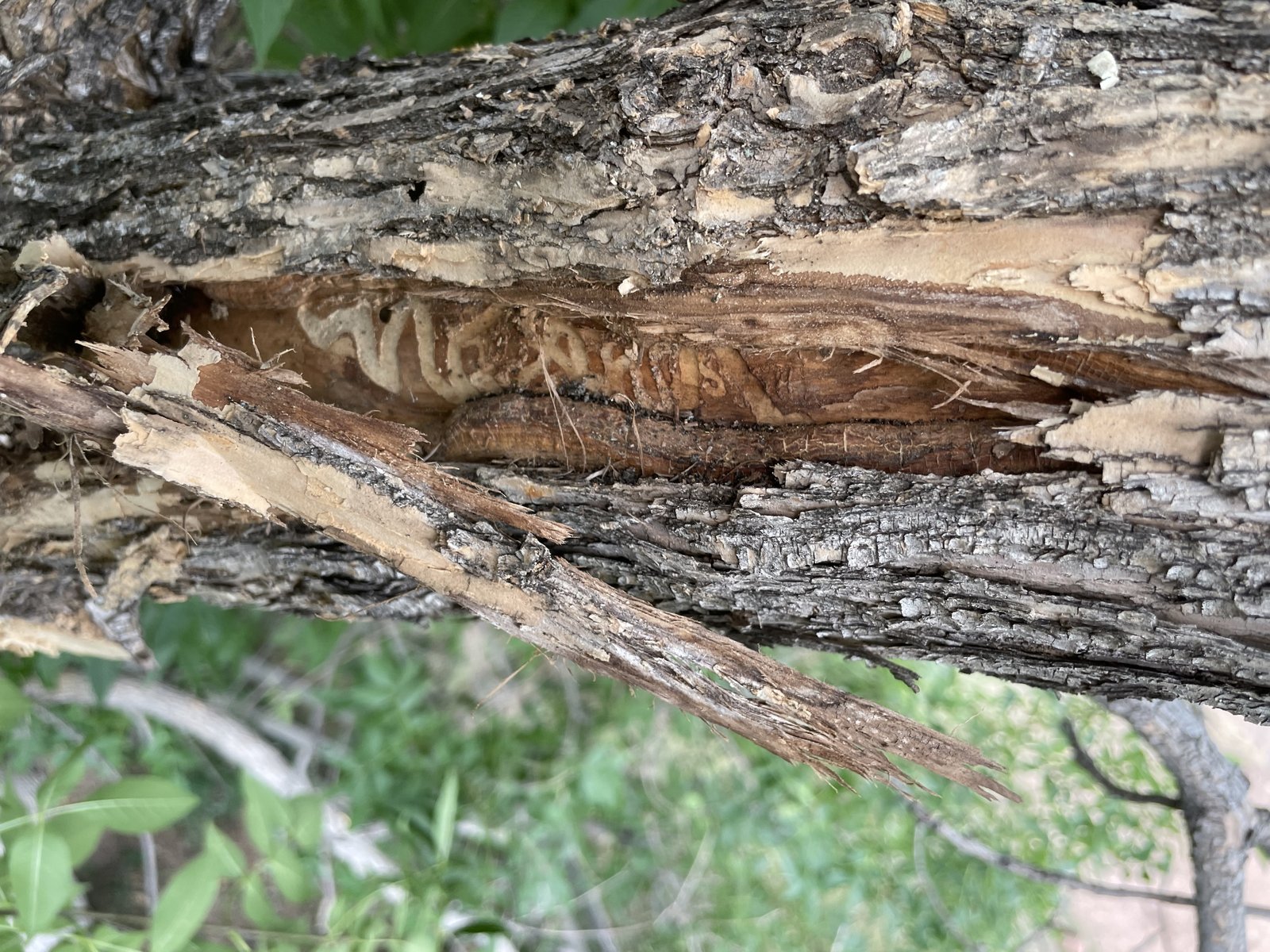
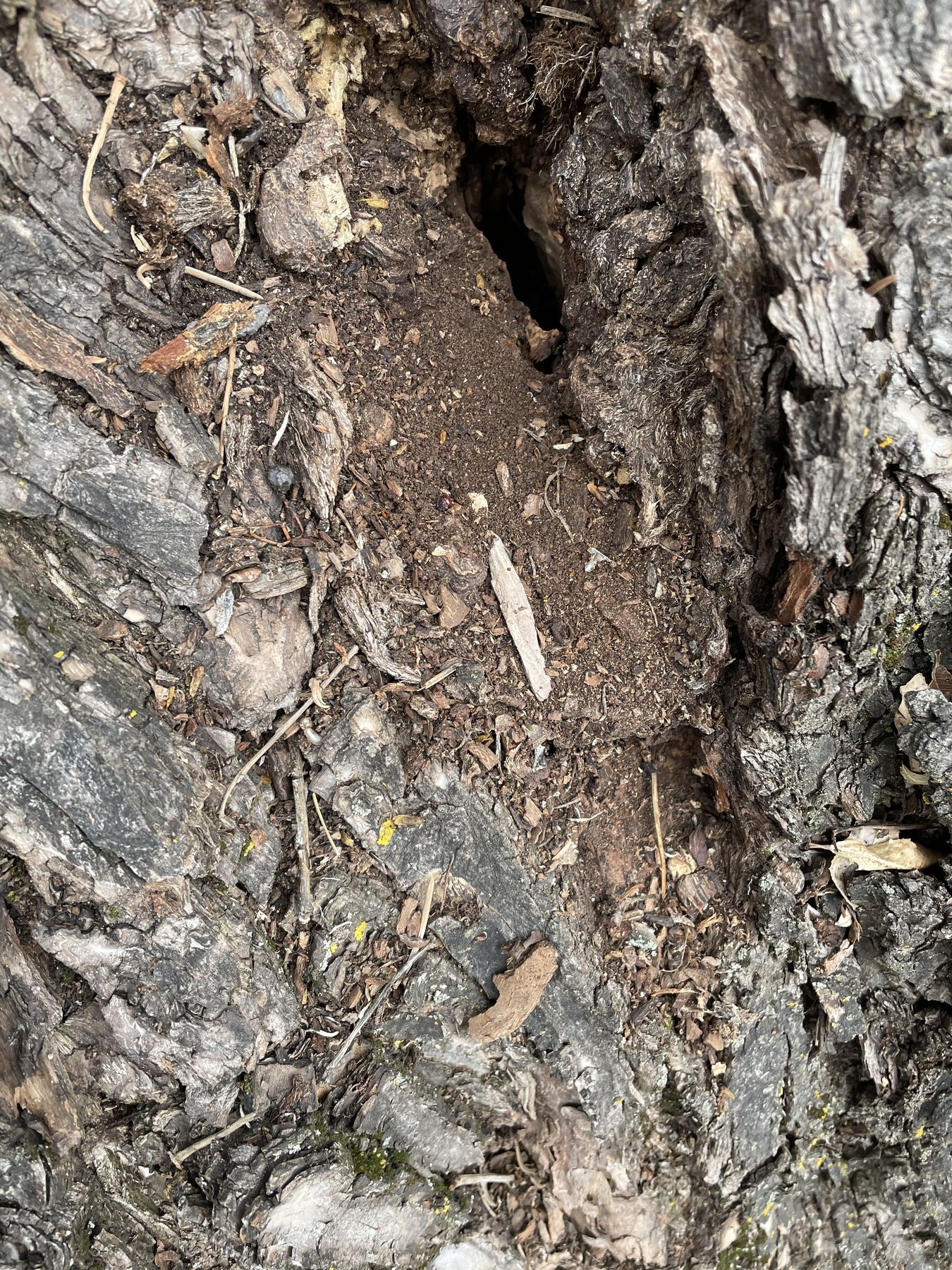
- Infestation assessment Checking for crown thinning, sprouting, D-shaped exit holes, and woodpecker flecking.
- Preventive injection Systemic treatment for ash worth preserving, on a repeating schedule.
- Removal planning Taking out ash that is not a treatment candidate before it becomes brittle.
See the work in action
Footage from a real job — shot by Kryn on-site in Boulder County.
Bark opened to reveal the tunnelling galleries left by emerald ash borer larvae
Where is this service available?
Emerald Ash Borer Treatment and Ash Tree Care is available across Boulder County and Broomfield.
Answers
Emerald Ash Borer questions Boulder homeowners ask
Is there still an emerald ash borer quarantine in Boulder County?
No. Colorado established a quarantine around Boulder County to limit the movement of ash wood after EAB was found here, but according to the Colorado State Forest Service that quarantine was repealed effective December 30, 2019. EAB itself is still very much present and active in Boulder. The absence of a formal quarantine does not mean the pest is gone, and Boulder County still advises handling ash wood and scheduling ash removals with spread in mind.
How can I tell if my ash tree has emerald ash borer?
Symptoms usually start at the top of the tree and move downward. Watch for general decline, crown thinning, dead branches, excessive sprouting along the trunk, and early fall color. The more specific signs are S-shaped tunnels under the bark and small D-shaped exit holes on the bark surface. Woodpecker damage is often the first thing homeowners actually notice: birds strip the gray outer bark to reach larvae, and the pale inner bark they expose is visible from the ground.
How long does an ash tree survive once it is infested?
Once infested, an ash typically dies within a few years, and it deteriorates fast in the final stage. That timeline is why waiting is the expensive choice. Once the tree is symptomatic it is no longer safe for an arborist to climb, so the removal has to be done with equipment or heavier rigging and the cost goes up.
Is it worth treating my ash tree or should I just remove it?
Treating is worth it for a structurally sound ash in a location where you value the tree, and pesticide treatment is inexpensive compared with removal plus replacement. The commitment is that treatment must continue indefinitely to keep the tree alive. If the tree is already in significant decline, poorly placed, or structurally compromised, removal and replanting with a non-ash species is the better long-term investment. An assessment tells you which category your tree is in.
Can I treat the ash tree in front of my house on the city strip?
Not on your own initiative. Ash trees in the public right-of-way are city trees. Boulder does allow adjacent property owners to treat public street right-of-way ash with Boulder Forestry's permission, through the city's process. Confirm with City of Boulder Forestry before arranging any treatment on a right-of-way tree.
Boulder County
Call for a site visit today
Early site visits and preventative maintenance catch conditions while they are still fixable. Talk to an ISA Certified Arborist about what your trees actually need.
Monday to Friday, 8am to 8pm. Closed Saturday and Sunday. All site visits include a 30 minute arrival window.

 Kryn Dykema · RM-8846A