Boulder, Colorado · ISA Certified RM-8846A
Boulder's holistic regenerative arborist
A holistic regenerative approach to tree care -- treating trees as living systems within the broader ecosystem. ISA Certified. Pruning, removals, plant health care, fire mitigation, cabling, and planting across Boulder County.
5.0 from 27 Google reviews
Licensed and insured
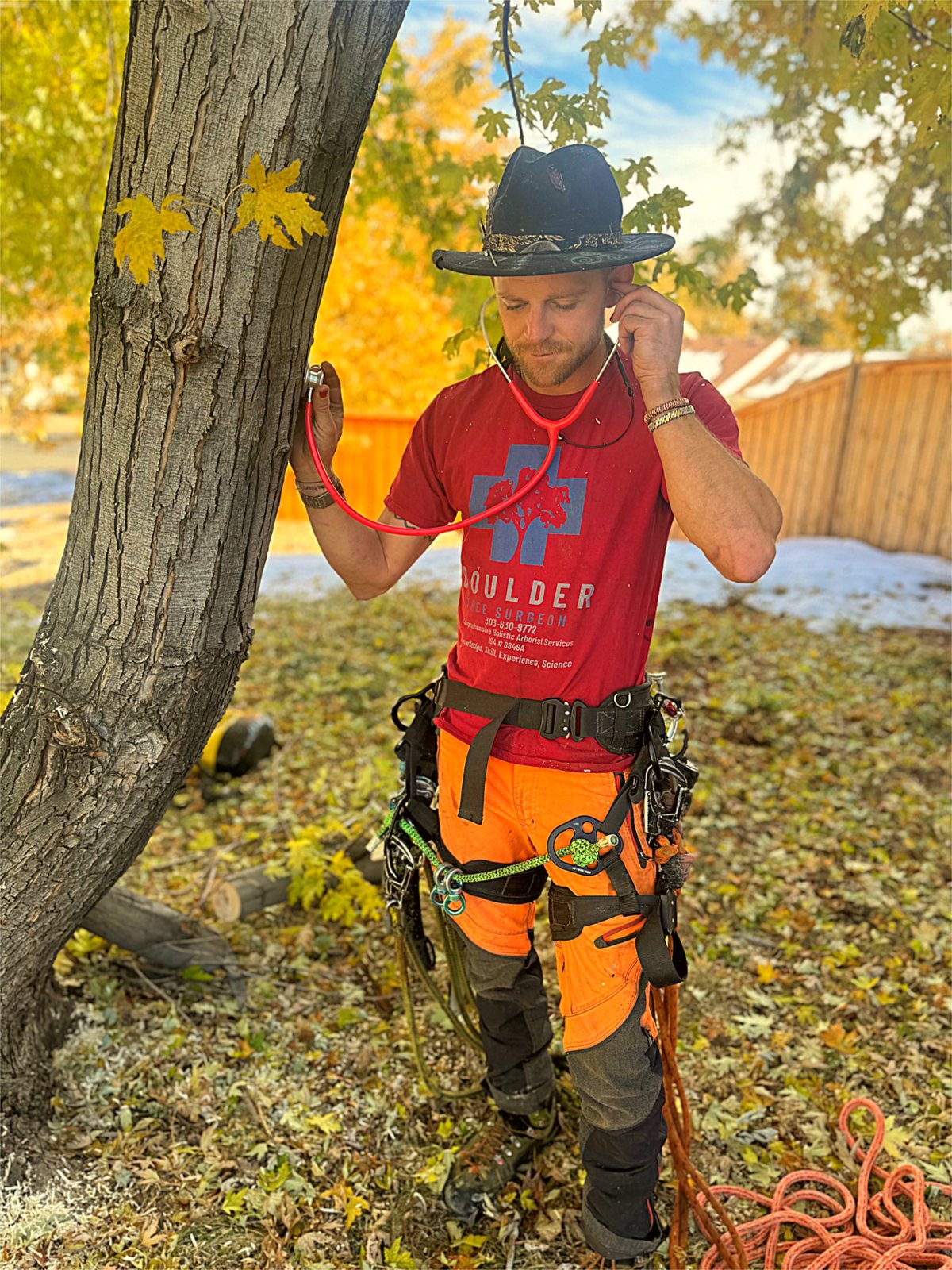
Our Mission
Boulder Tree Surgeon exists to cultivate healthy, resilient trees and landscapes through holistic, regenerative arboriculture. We care for the whole living system—from soil and roots to trunk and canopy—combining science, skilled arboriculture, careful observation, and respect for the natural processes that allow trees to thrive. Our mission is not simply to solve problems, but to prevent them: helping trees live longer, landscapes become more resilient, and the people who care for them better understand the living ecosystems around their homes.
Who we are
Boulder Tree Surgeon is owned and operated by Kryn Dykema, ISA Certified Arborist RM-8846A, practicing as a holistic regenerative arborist in Boulder, Colorado. Holistic means looking at the whole ecosystem, not just the tree you called about. That means the bushes, the shrubs, the grass, the mulch, and what is underneath the mulch, because most tree problems in Boulder start below ground. Trees are long-lived organisms, not machines, and treating only the visible symptom leaves the cause in place. Services span structural pruning, removal, plant health care and trunk injections, emerald ash borer treatment, wildfire mitigation, cabling and bracing, and planting across Boulder County and Broomfield.
Services
What does Boulder Tree Surgeon do?
Comprehensive, holistic arborist services. That means the tree gets assessed as a living system in its actual site conditions, and the recommendation follows from the diagnosis. Every photo below is from a real Boulder job.
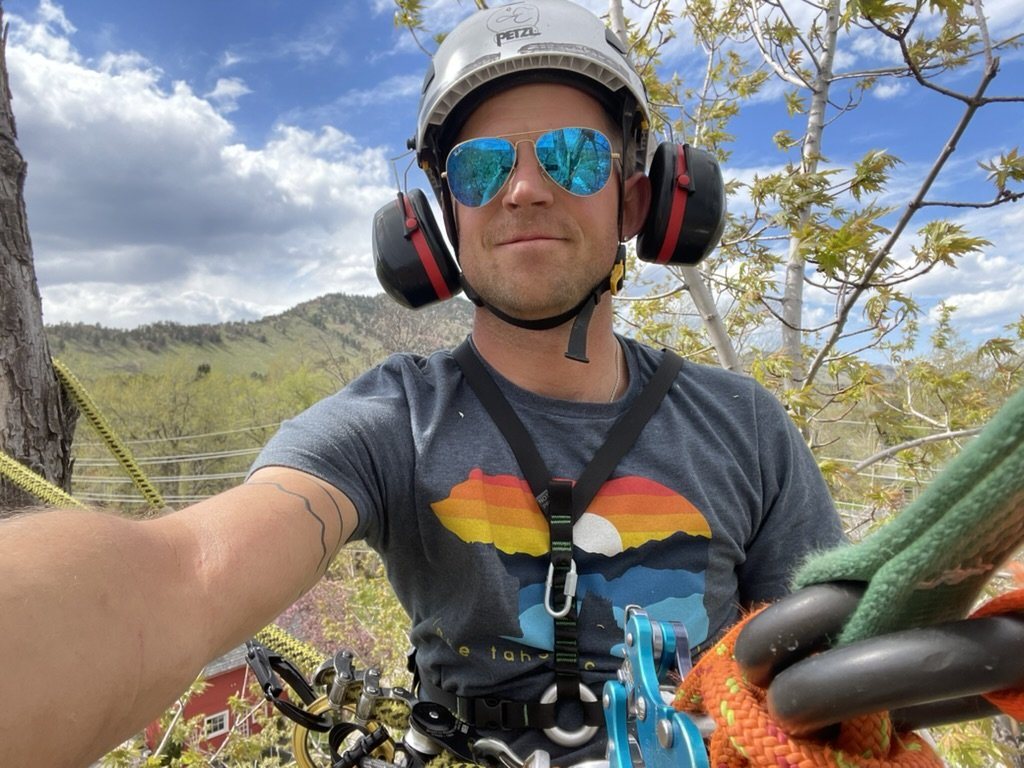
Tree Pruning and Structural Maintenance
Structural pruning that builds strong leaders and protects limbs against Front Range sun, snow, and wind.
Learn more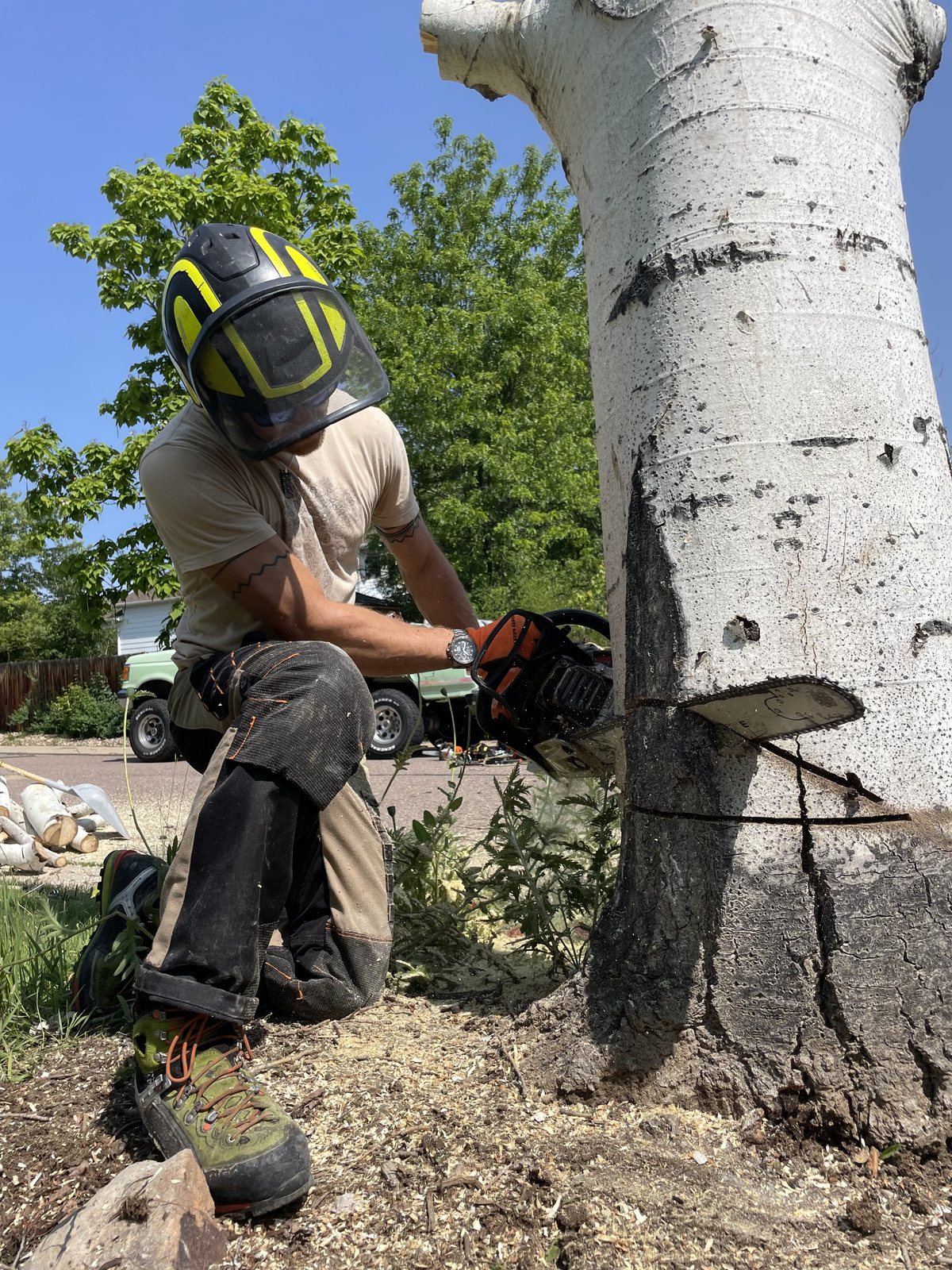
Tree Removal
Safe, thorough removal when a tree is beyond saving or in unacceptable conflict with people and structures.
Learn more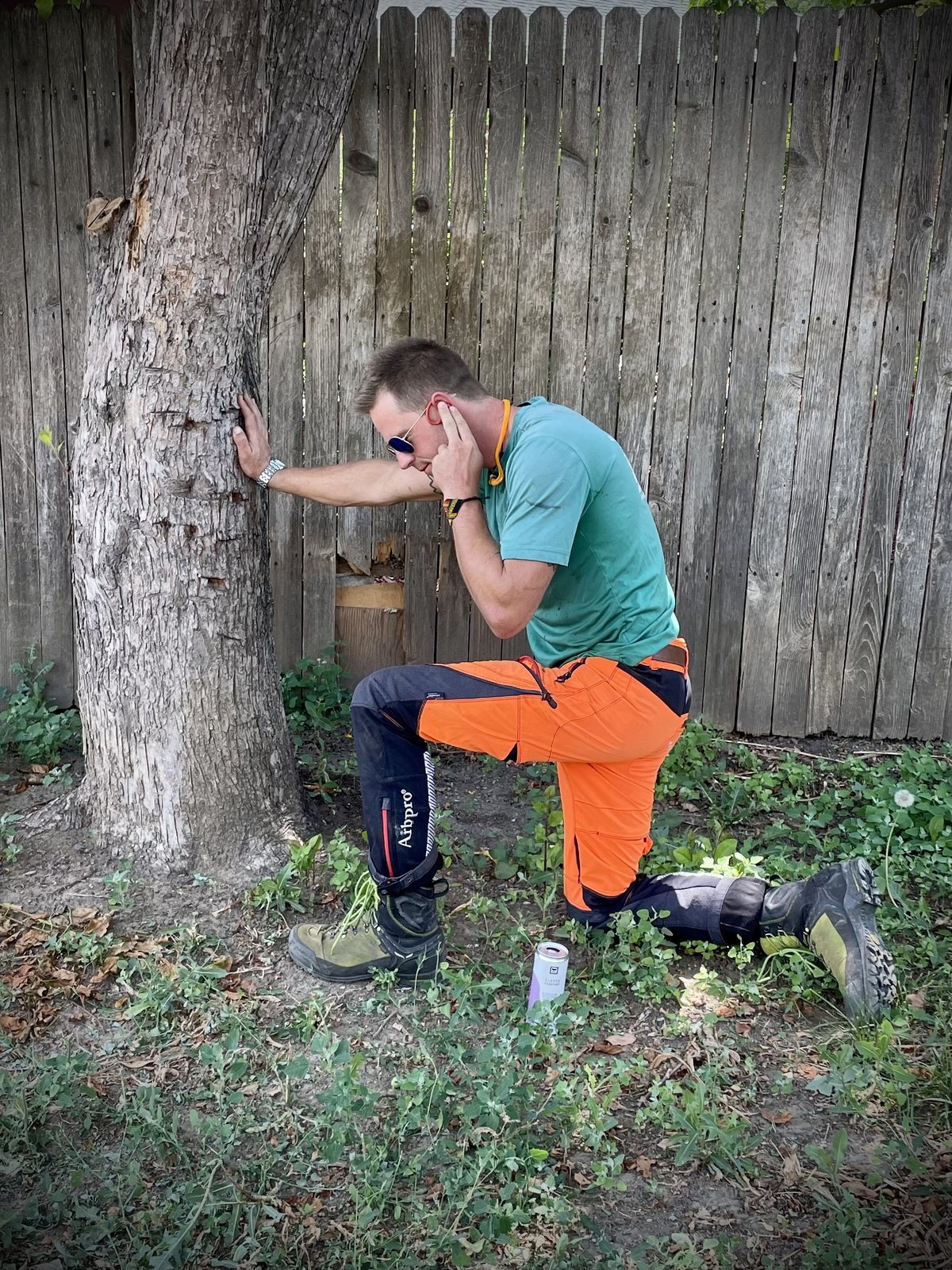
Plant Health Care and Trunk Injections
Diagnosis first, then targeted injection of insecticides, fungicides, resistance activators, or nutrients.
Learn more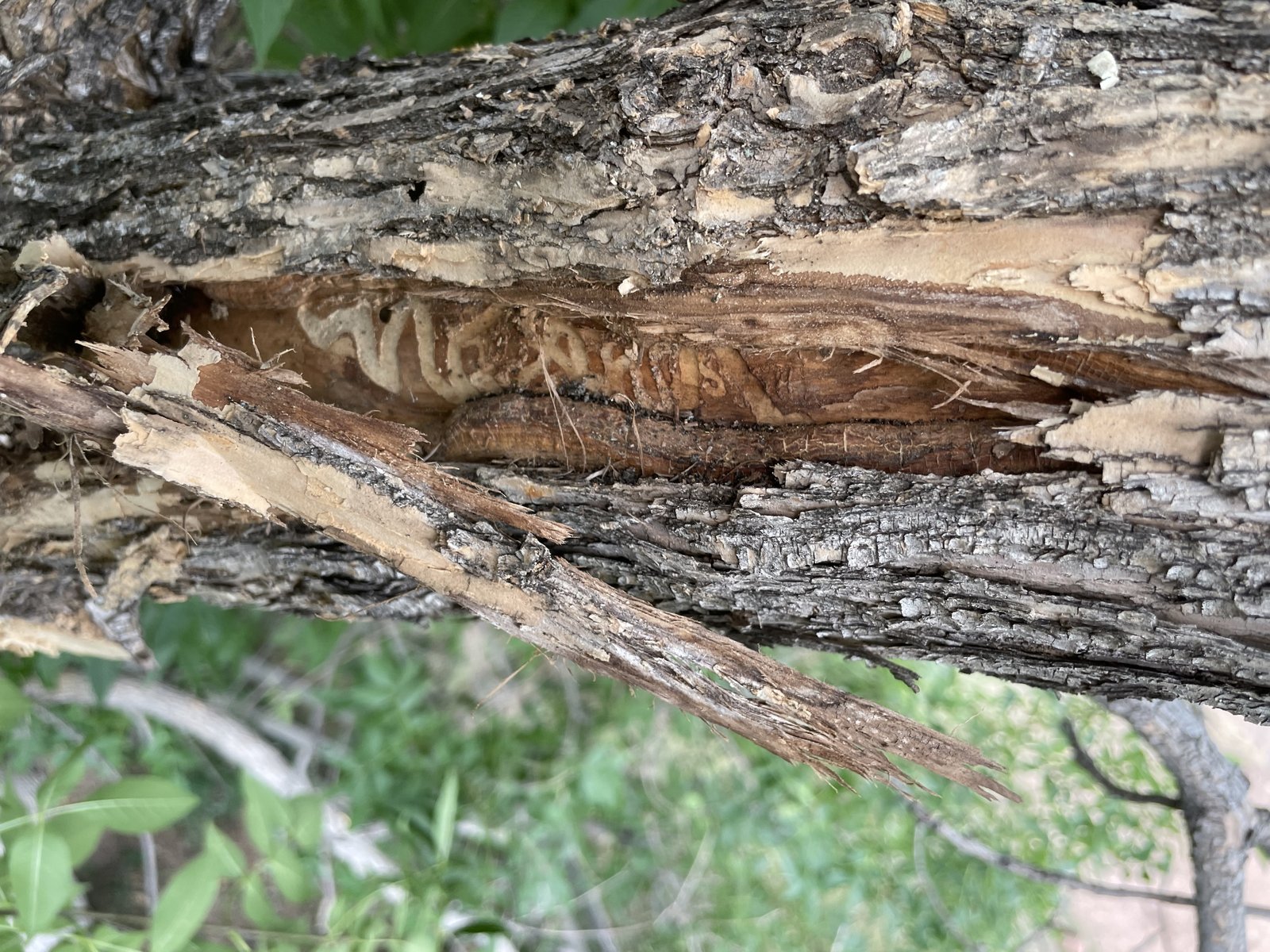
Emerald Ash Borer Treatment and Ash Tree Care
Boulder is where EAB was first found in Colorado. If you own an ash, it needs a decision: treat it or plan its removal.
Learn more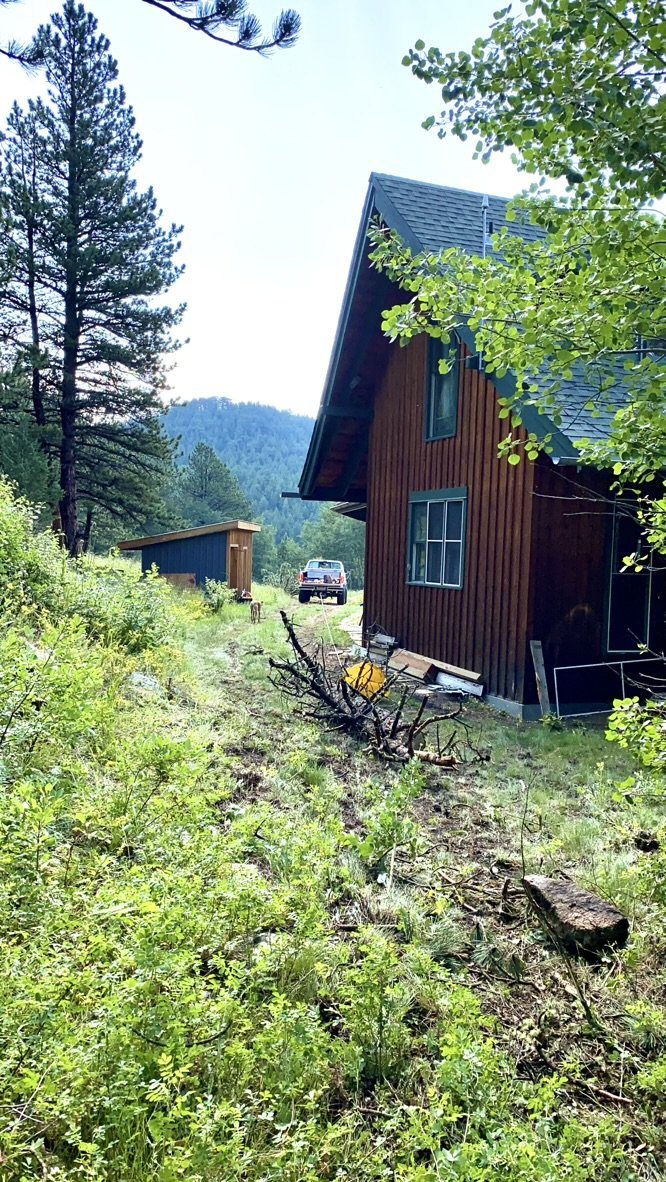
Wildfire Mitigation and Defensible Space
Ladder fuel reduction for homes and HOAs, assessed by an arborist who spent years as a woodland firefighter.
Learn more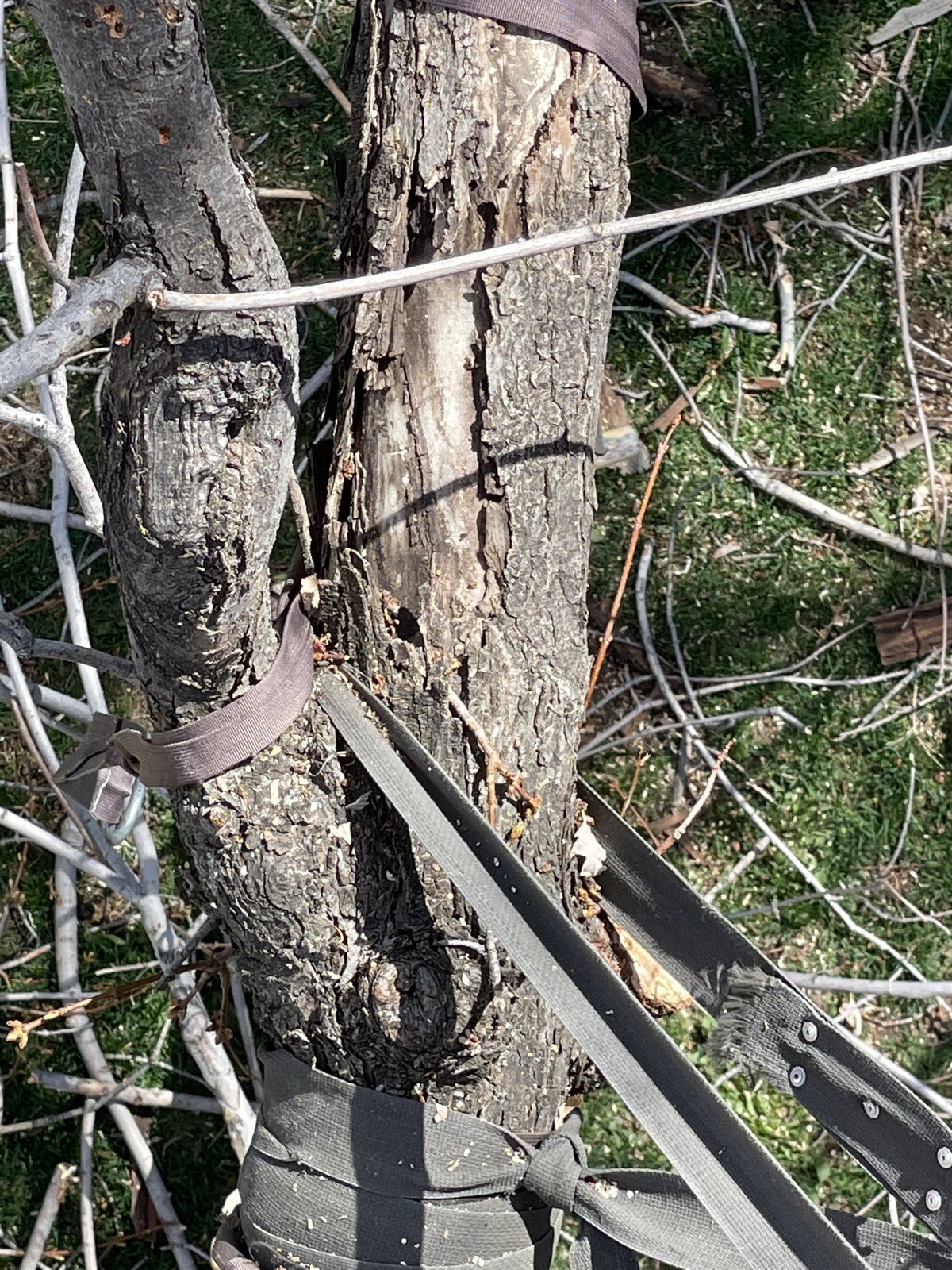
Cabling and Bracing
Braided cable support for codominant unions that are pulling apart, installed to let the tree keep flexing.
Learn more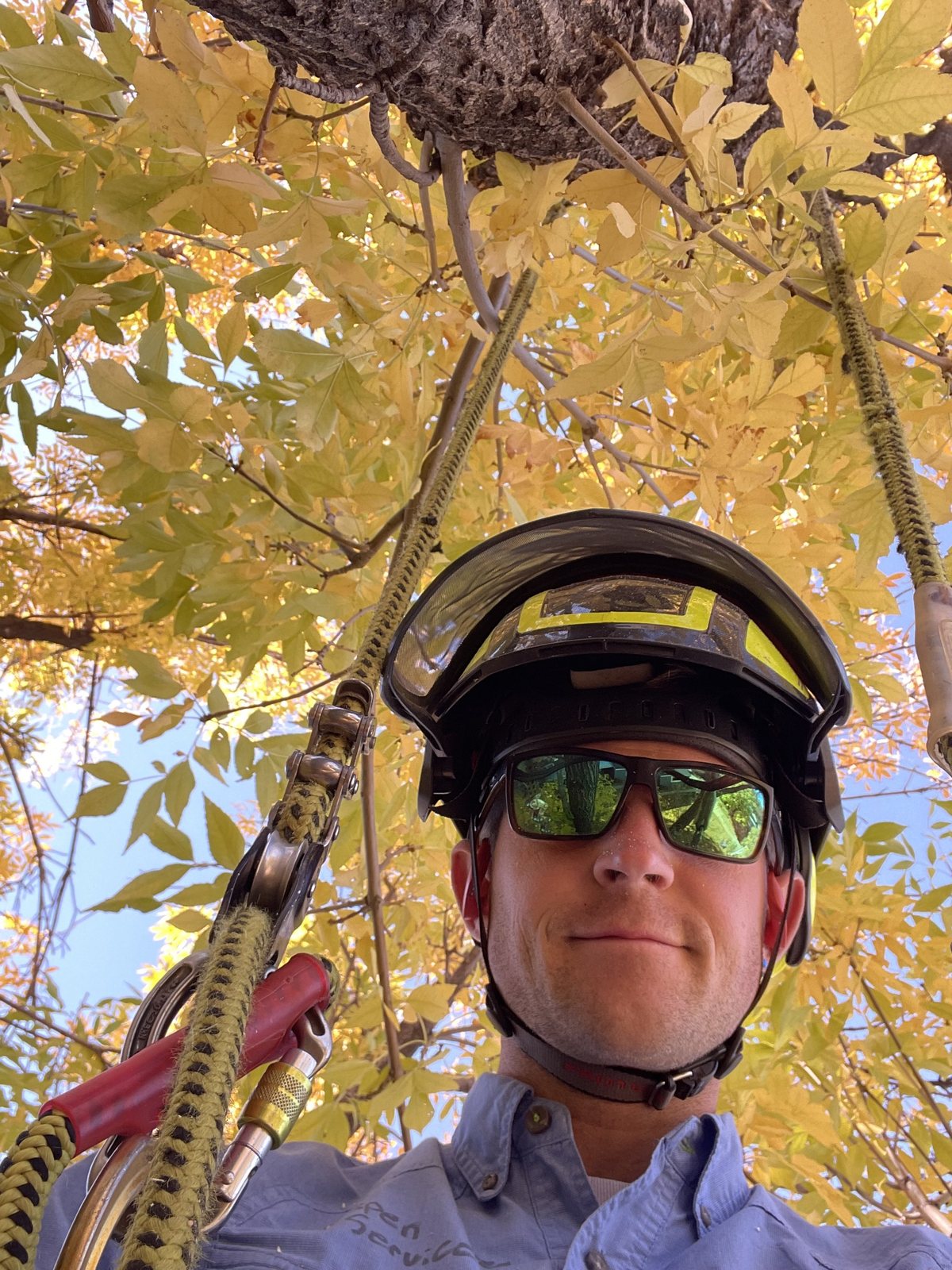
Tree Planting and Species Selection
Thorough, well selected planting. Nursery trees are expensive, and this is not the place to cut corners.
Learn more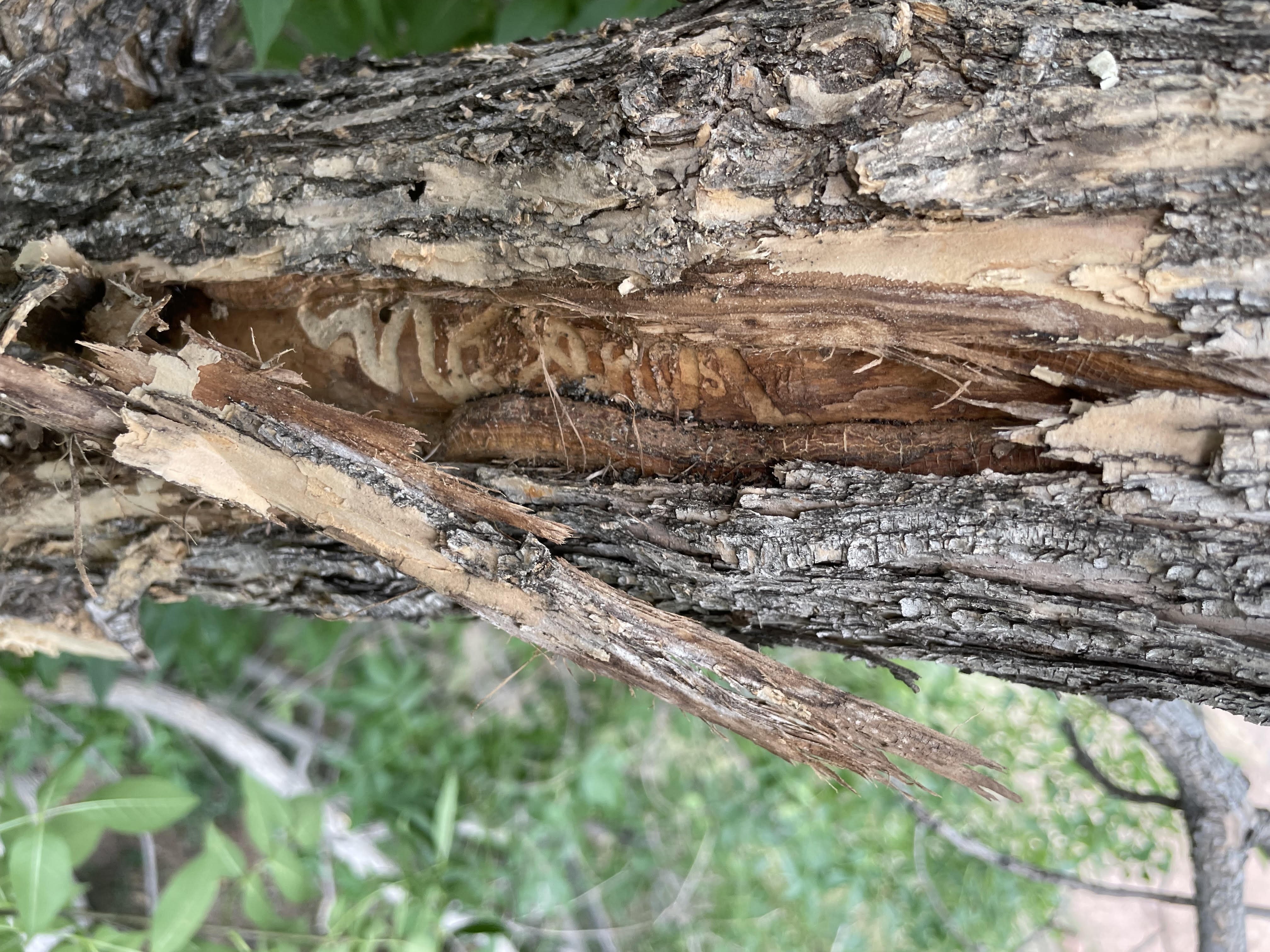
Tree Risk and Health Assessment
An early site visit by a certified arborist catches conditions before they become a removal invoice.
Learn more Emerald ash borer
Own an ash tree in Boulder?
Boulder is where emerald ash borer was first detected in Colorado, in September 2013 by Boulder Forestry. According to the City, every untreated ash in Boulder will eventually be killed by it, including trees that look completely healthy right now.
That leaves two options: treat it on an ongoing schedule, or plan its removal while it is still safe to climb. Waiting produces the expensive third outcome.
- First CO detection
- Boulder, Sept 2013
- City ash treated
- ~1,300 public trees
Figures published by the City of Boulder.
What to do about your ash tree Every site visit comes with a thirty minute arrival window.
The case for calling early
Why does an early site visit save money?
Trees are extremely valuable to a property and worth protecting, and identifying conditions and diagnosing trees properly requires extensive education. The pattern we run into constantly is that arborists get called after a tree has been presenting issues for some years and has already entered a mortality spiral.
Even if your trees look healthy, regular site visits by an ISA Certified and qualified arborist can catch conditions early and save you thousands long term. Removing a tree is often a tragedy. It eliminates the value the tree provided as shade, as habitat for animals, and as something you enjoyed, and it is extremely costly.
Diagnosis first
Arboriculture is both an art and a science. Managing a tree so it keeps developing takes classroom education and field experience.
Fire experience
Kryn worked as a woodland firefighter for a number of years, so the mitigation assessment comes from someone who has seen how fire moves.
Boulder specifics
Emerald ash borer, city right-of-way rules, wet spring snow loading, and canyon fire exposure are local problems needing local answers.
Born in Boulder
A local arborist, not a franchise crew passing through. Comprehensive consultations and competitive prices.
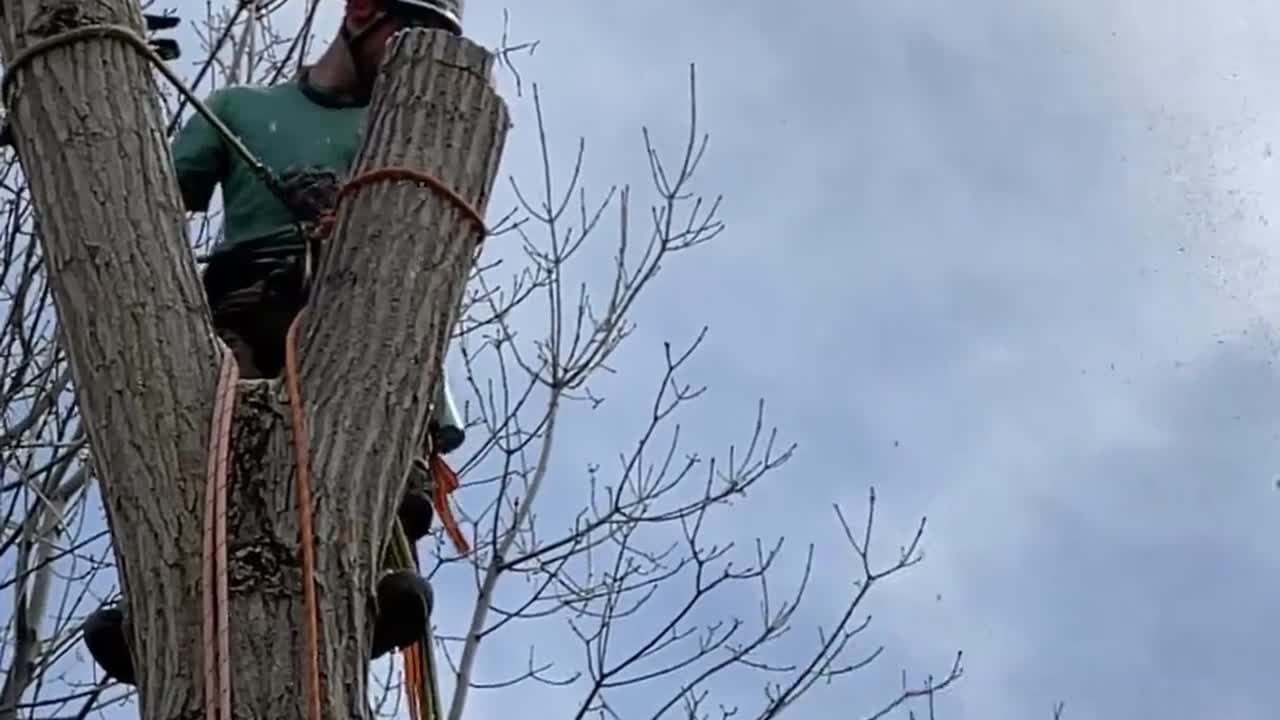
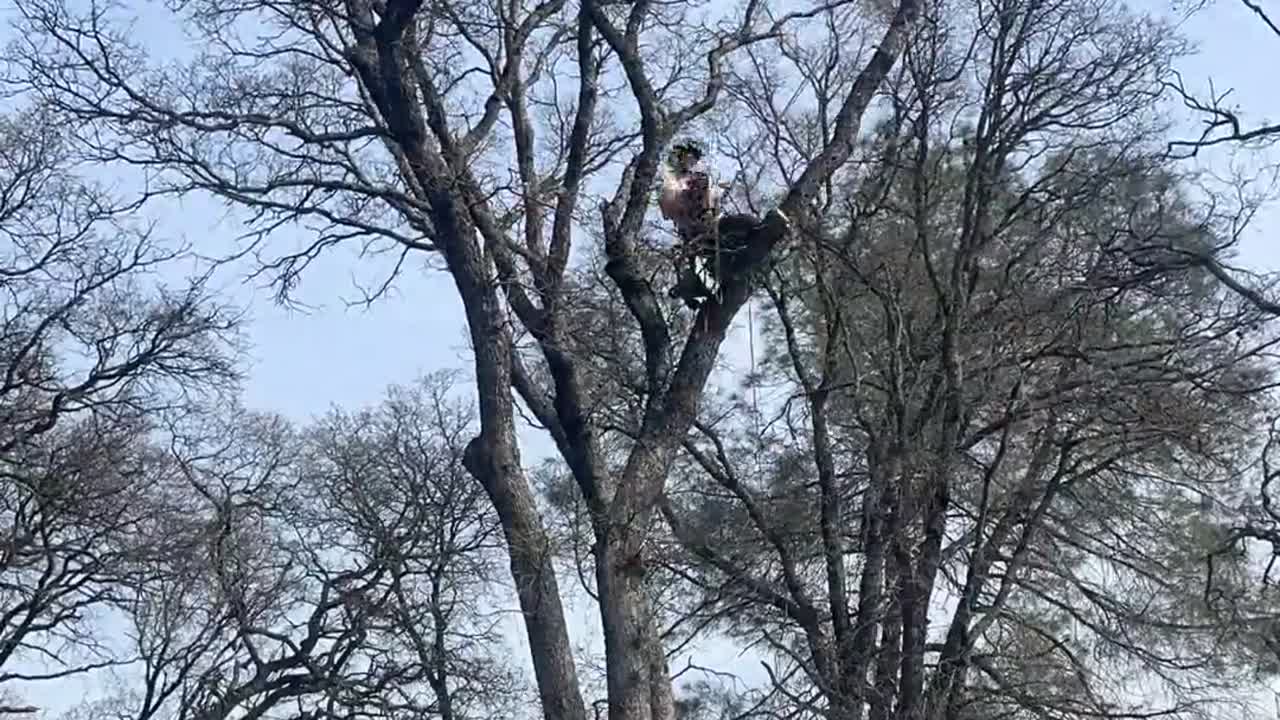
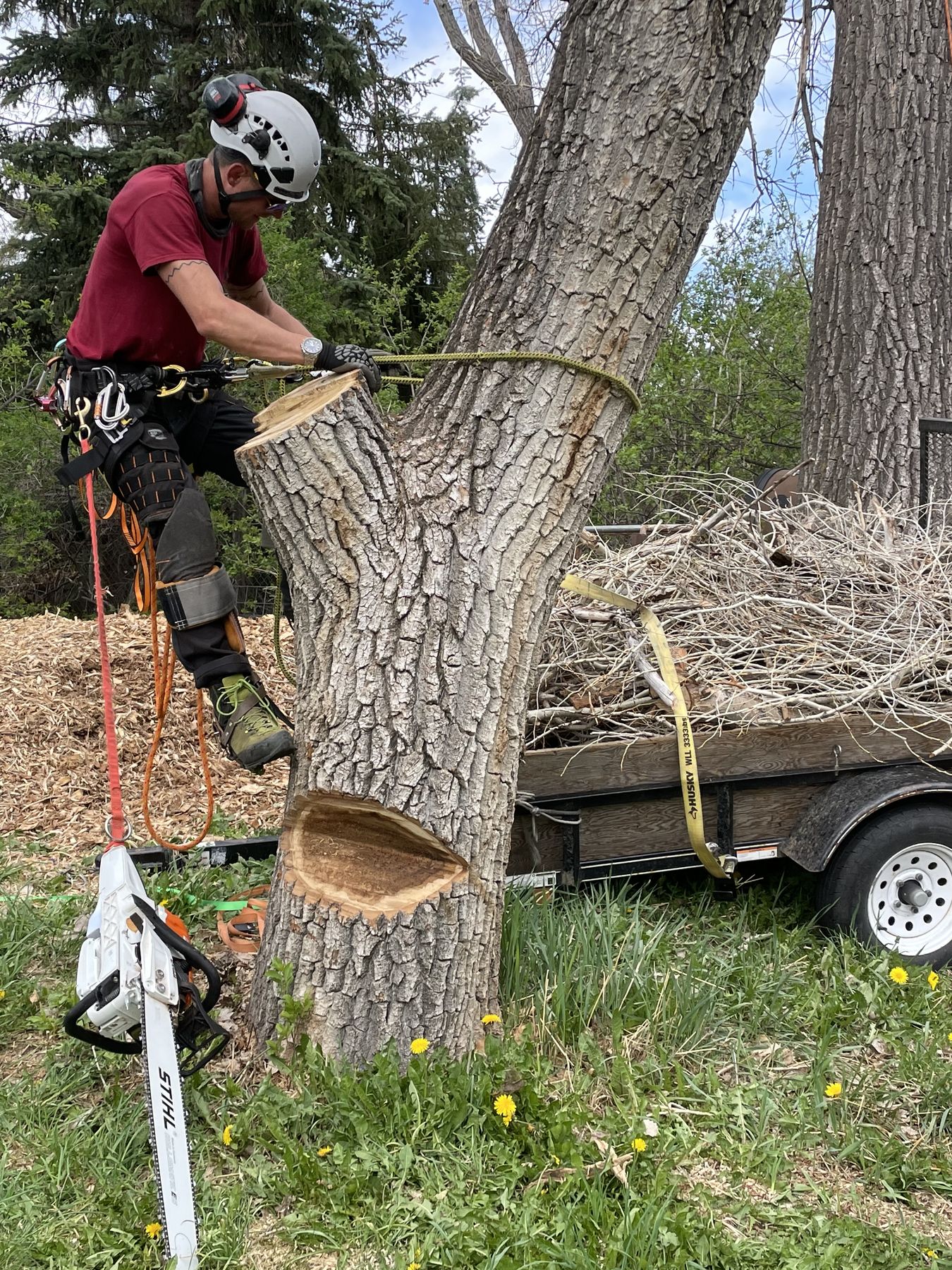
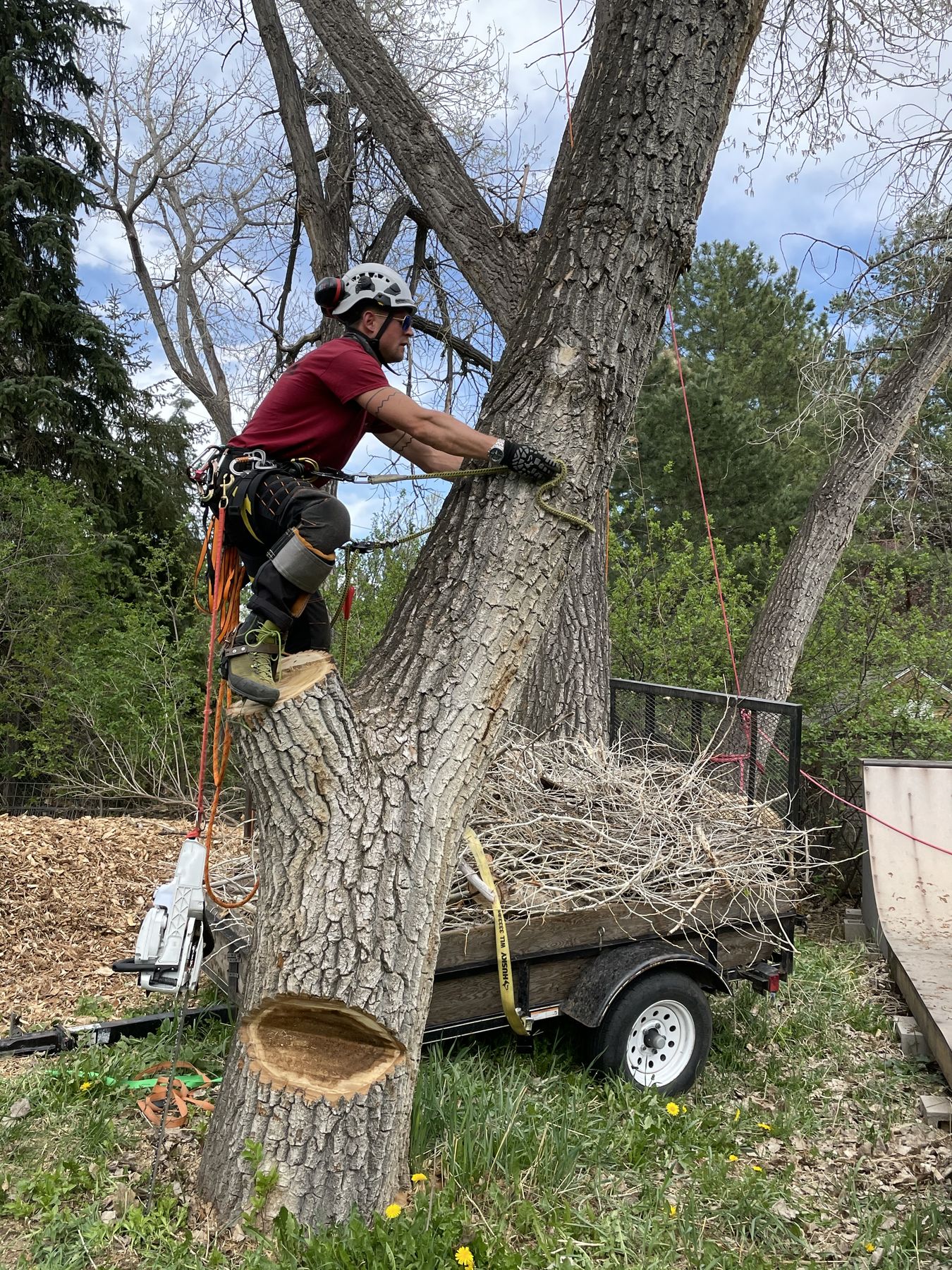
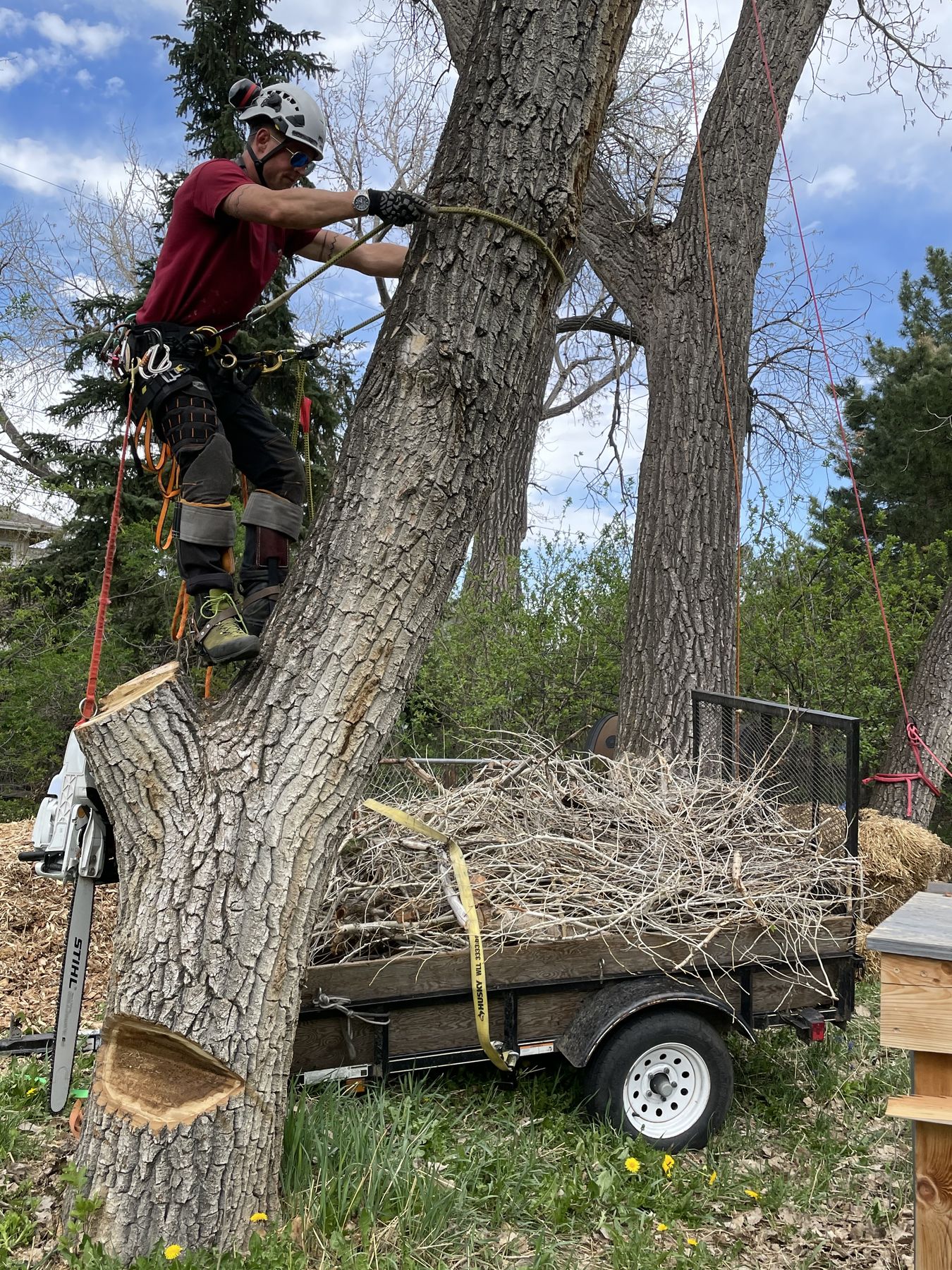
Rigging, dismantling, and climbing done by a certified arborist, not a crew with a chainsaw
A large log section captured mid air on a rigging line, sawdust spraying, arborist tied into the spar. Real work, in Boulder, filmed on the job.
On the job
Boulder trees, Boulder work
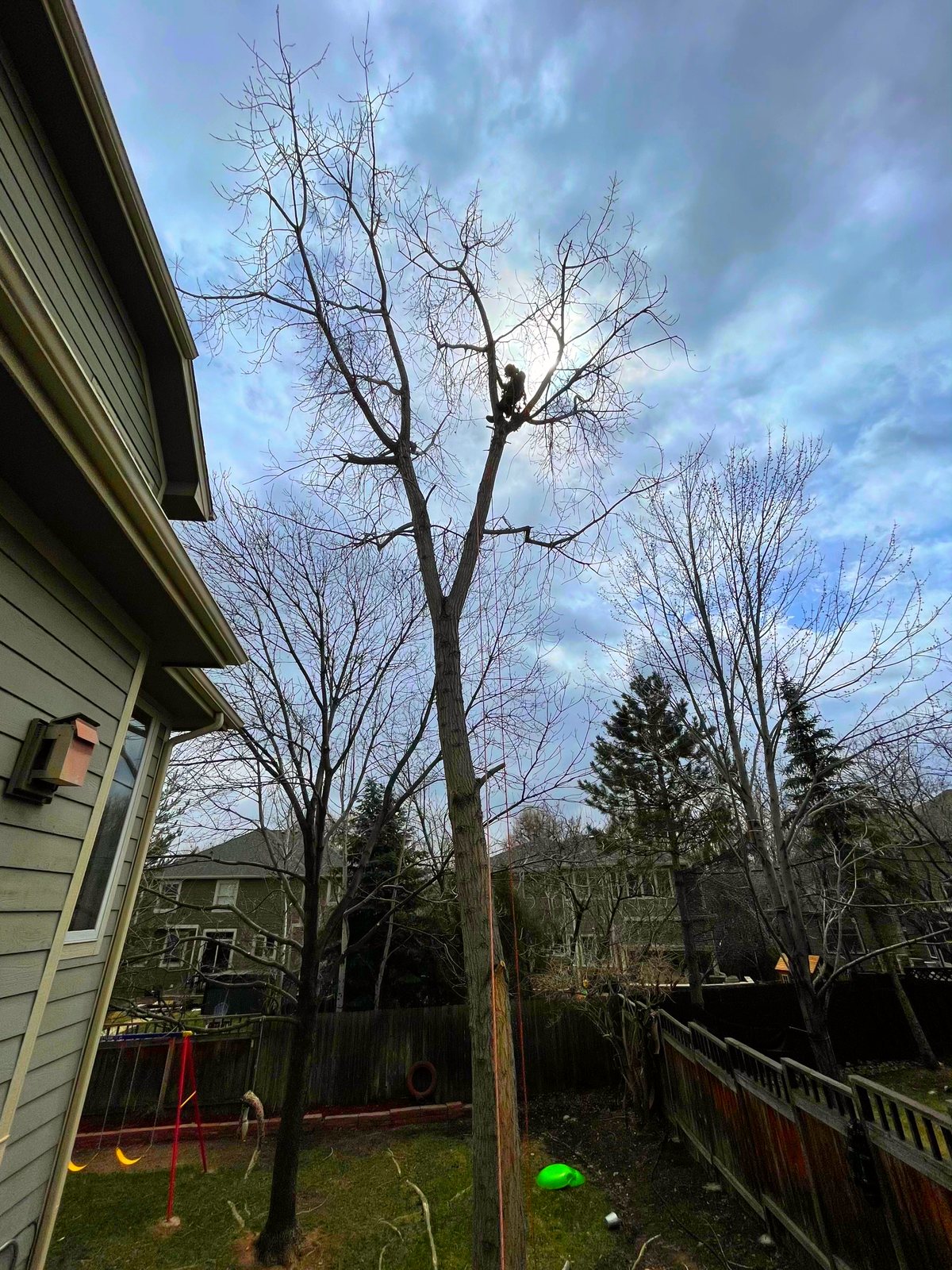
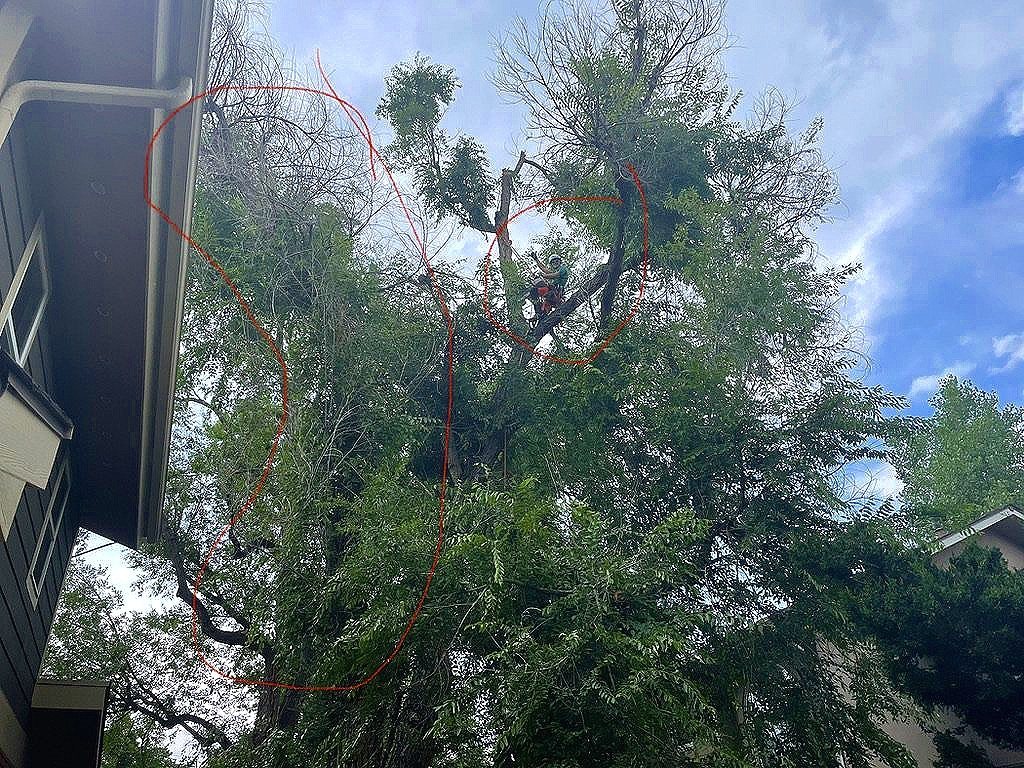
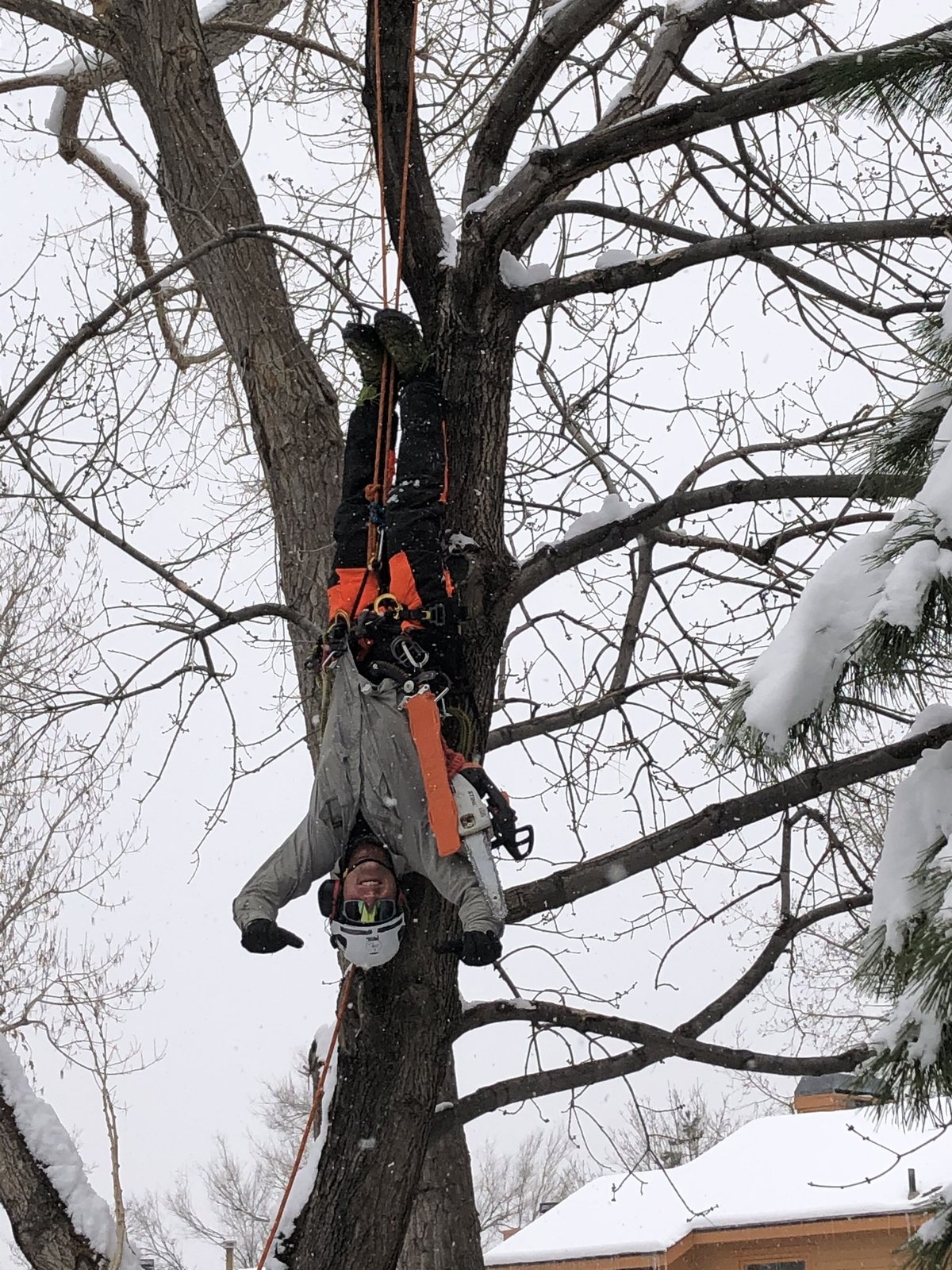
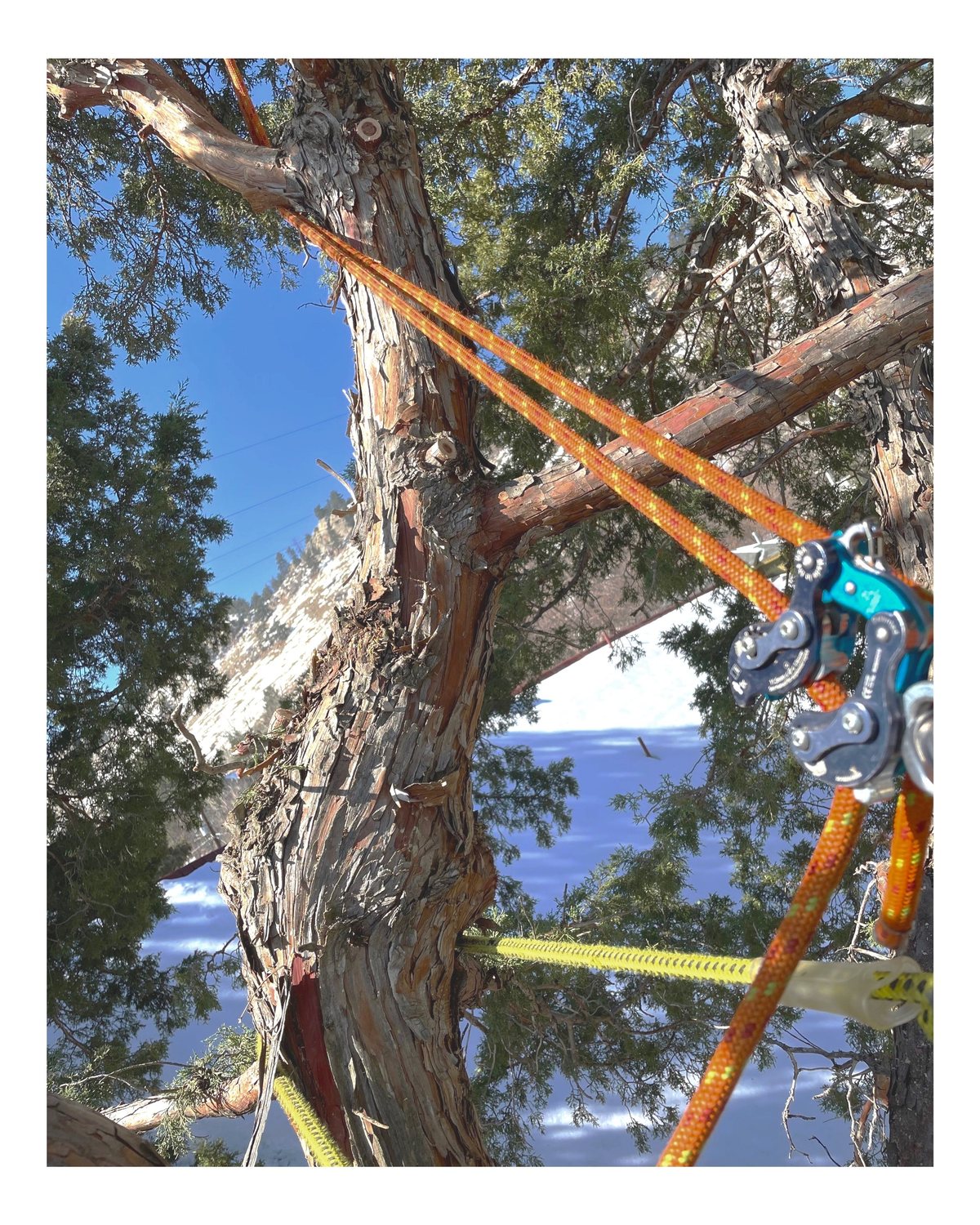
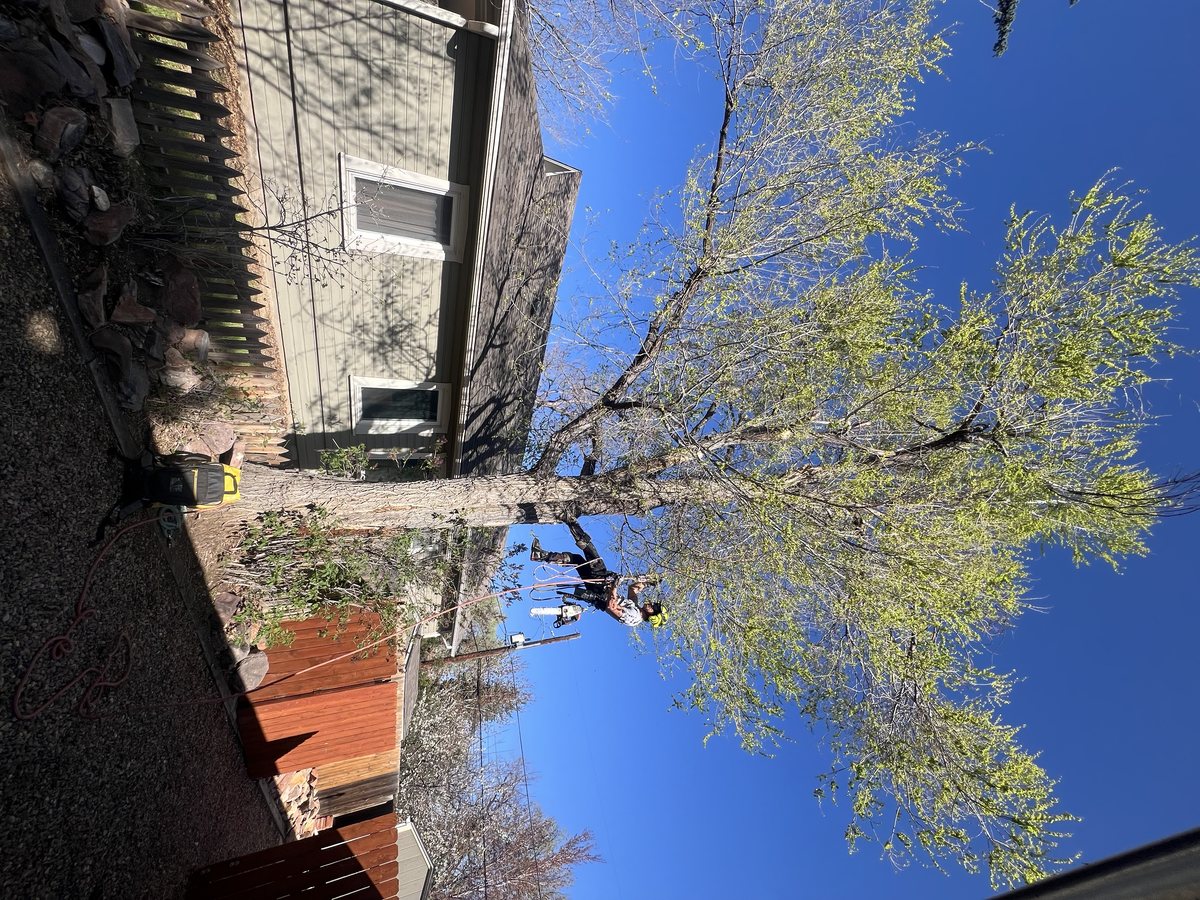
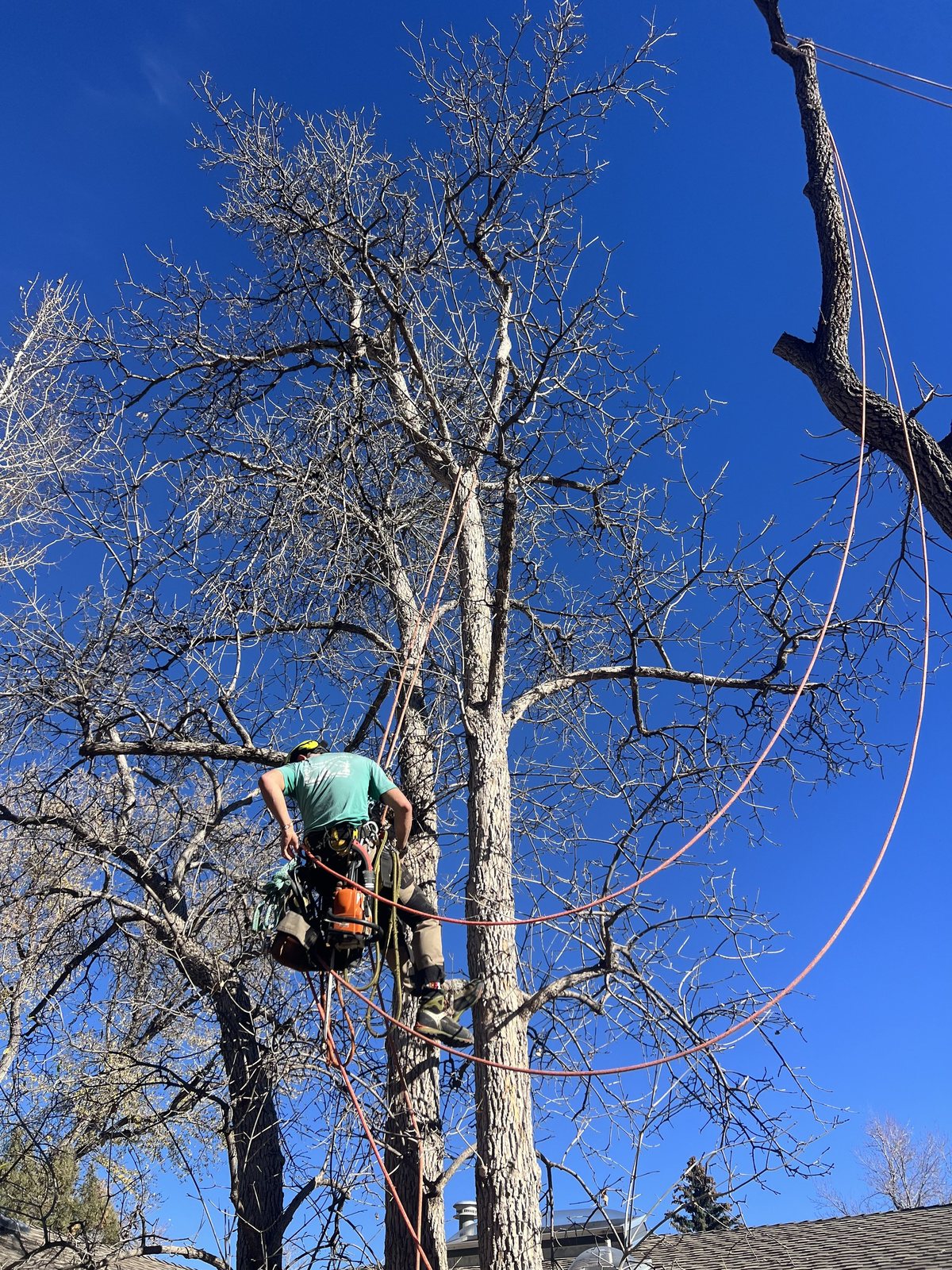
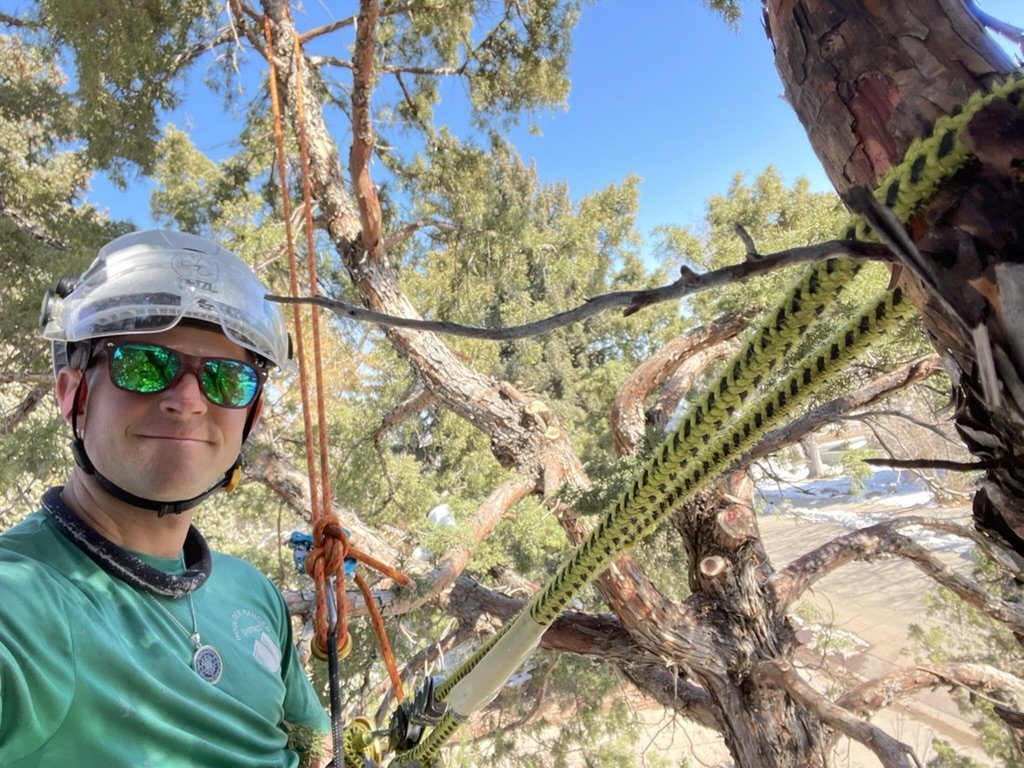
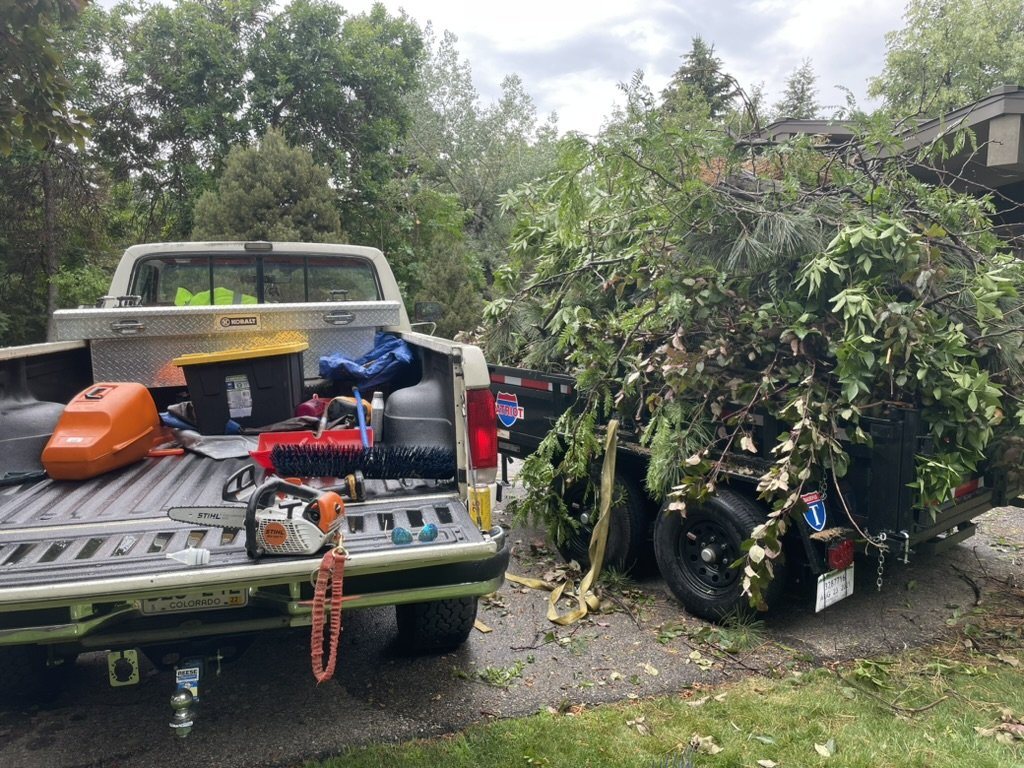
Every photograph on this site is from an actual Boulder Tree Surgeon job. No stock photography, no trees from some other ecosystem.
Service area
Where does Boulder Tree Surgeon work?
Based at 1550 Redwood Ave in north Boulder, serving Boulder County and Broomfield, including mountain properties up Boulder Canyon.
Property walk-through
What does a property walk-through include?
Kryn offers clients a full spectrum view of what is happening on their property. Not just the tree you called about. For a minimal fee he will walk the property with you and put the findings in writing.
- A walk of the whole property
- Trees, shrubs, bushes, grass, mulch. The mulch gets pulled back and the weed barrier underneath gets pulled back, because that is where most of the problems actually are.
- A written summary
- A write-up of the things you need to keep an eye on, so you are not relying on memory from a conversation in the driveway.
- A map of your property
- Where the trees are, what condition each one is in, and which ones are crowding each other.
- A watering and care schedule
- What to water, how long to run it, when to fertilize, and what symptoms mean it is time to call an arborist rather than wait.
Most calls start because a homeowner noticed one thing: a dead limb, weeping sap, wilting leaves. The walk-through is how the rest of the property gets looked at while someone is already there. A standing dead spruce is the reason for the visit. The cottonwood with dead limbs hanging over a young tree that is trying to grow is what gets found.
Call 303-630-9772 to schedule A big property with 20 or 30 trees can expect to spend roughly five to eight thousand dollars every ten years on tree work. A single mature maple or oak can be worth something closer to fifty thousand dollars in shade, in what it does for the look of the place, and in what it does for the people living there. The maintenance is not the expensive part.
Resources
Guides for Boulder tree owners
Deep Watering Trees in Boulder: Why Thirty Minutes Is Not Enough
During the dry season you are not wetting the surface, you are rebuilding a water table. That takes two hours of sprinkler, not thirty minutes.
Soil and Root HealthThe Weed Barrier Under Your Mulch Is Killing Your Boulder Tree
Pull the mulch back, pull the fabric back, and the soil underneath is cracked and bone dry. In a wet climate the water gets through. In Colorado it pools on top.
Tree HealthEmerald Ash Borer in Boulder: Treat It or Remove It?
Boulder is where emerald ash borer entered Colorado. If you own an ash tree here, doing nothing is itself a decision, and it is the expensive one.
PruningWhen to Prune Trees in Boulder, Colorado
Late winter is the default answer, but the right timing depends on what you are trying to accomplish and what species you are working on.
Wildfire MitigationDefensible Space for Boulder County Homeowners: Where to Start
Fire climbs a ladder from grass to shrubs to low branches to canopy. Mitigation is the work of removing the middle rungs, and it starts closest to the house.
Answers
Common questions about tree care in Boulder
What is a holistic regenerative arborist?
A holistic regenerative arborist treats trees and the soil they grow in as part of a living ecosystem, not as isolated objects to be pruned or removed on demand. Regenerative practice means building conditions that allow trees to thrive long-term -- healthier soil biology, reduced chemical dependency, structural support that works with the tree rather than against it. Kryn Dykema applies this philosophy to residential and commercial tree care across Boulder County, informed by years working alongside regenerative landscape designers whose sustainable approach is transforming how Colorado properties are managed.
Why is the weed barrier under my mulch bad for my tree?
Because in Colorado it turns the root zone into a desert. Pull the mulch and the weed barrier back on a typical Boulder planting bed and the soil underneath looks like the Sahara Desert: cracked earth, squiggle trails where worms used to travel, and no moisture at all. There is so little moisture here to begin with that when what does fall hits any kind of resistance, it pools on top of the fabric instead of passing through. In a wet climate the water would work its way down. Here it does not. The barrier also starves the soil of oxygen. Soil health comes down to three things: retaining moisture, allowing oxygen flow, and keeping an insulating layer over the top. Weed barrier defeats the first two. The fix is to remove it and lay down thick mulch instead, which insulates the soil and holds moisture in it.
How long do I actually need to water a mature tree?
Two hours or more of sprinkler running over the square footage at the base of the tree, not thirty minutes. During the dry season you are not wetting the surface, you are rebuilding a water table, and it takes that long to get water soaking roughly 14 inches into the soil, which is the depth where it can transfer nutrients from the soil into the tree. The single best thing a homeowner can do is a shake-and-feed fertilizer around the base of the tree followed by a deep watering. That combination is a giant drink of electrolyte water for the tree. It does drive the water bill up. It is also the difference between a green, vibrant tree and one slowly losing ground.
Why should I remove the grass around the base of my tree?
Because grass wins the competition for water. If you run thirty minutes of irrigation over a tree whose roots sit four inches down, under three inches of turf, the grass soaks up nearly all of it before it ever reaches the tree. It works like a basil plant in a small pot: dense root system, and the soil is bone dry the next day because the plant pulled every bit of water out of it. Removing turf at the base of the tree and replacing it with a mulch layer gives the tree the three things soil needs to stay healthy: moisture retention, oxygen transfer, and insulation.
When should I plant the next generation of trees on my property?
When the trees you have are around 40 years old. A young tree needs roughly 15 years to genuinely establish itself, so if you wait until the old trees are declining and dropping limbs, you have a 15 year gap in your canopy. Plant at 40 and by the time that tree reaches 50 and is approaching the end of its lifespan here, there is already an established generation growing underneath it. Staging tree generations this way is one of the things a good arborist should be doing for a client, and it also means keeping the younger trees from being height-limited by the limbs of the older ones above them.
My arborist wants to remove a whole limb because of a cavity. Is there another option?
Often yes, and filling the cavity is frequently the better answer. A cavity usually starts as a pruning cut made horizontal to the sky, so rain falls straight into it, the cut never seals, and it hollows out. Some of these are big enough to put an arm into. Filling that space with a structurally sound material keeps water out and keeps the limb. The alternative matters: those cavities are often in limbs 12 to 14 inches wide, and cutting one of those out creates a huge wound and removes a large portion of the leaf area the tree uses to collect sun and produce the sugars it eats. Cavity filling is old arboricultural practice going back to the 1920s, and it is something Kryn does regularly in Boulder. He has not seen another arborist in town doing it. Most either leave the cavity open or take the whole limb.
Everyone says a tree with ash borer is a goner. Is that true?
Not always. Borers and other insects go after weak trees. It works like a weak immune system: if someone coughs around you when you are run down you catch it, and if you have been eating well and taking care of yourself your body fights it off. A dry, stressed ash is far more susceptible to ash borer than a well-watered one. Search online and you will read that an infested ash has a two year lifespan and that injecting and pruning will not work. Kryn has brought ash trees back that other arborists called removals, and the same is true of maples written off with a dead top. The honest answer is that it depends on the specific tree, which is what an assessment is for. What is certain is that a tree kept watered and fed is a much harder target.
What does an ISA Certified Arborist do that a tree service does not?
ISA certification means the arborist has been tested on tree biology, diagnosis, pruning standards, and safety, and has to maintain that credential. In practical terms it changes the order of operations: the work starts with identifying what is actually wrong with the tree, rather than quoting the removal. It also matters in Boulder specifically, because the City restricts work on public right-of-way trees and on pest-infested trees to licensed certified arborists.
Do you offer emergency or storm response?
Storm-damaged and hazardous trees are handled as a priority. Deadwood, hanging limbs, and trees that have failed but not fallen do not wait for a seasonal window. Call 303-630-9772 and describe what happened and what is underneath the tree.
What areas do you serve?
Boulder is home base, with service extending across Boulder County and into Broomfield: Boulder, Louisville, Lafayette, Longmont, Niwot, Erie, Superior, Lyons, Nederland, and Broomfield. Mountain properties up Boulder Canyon and out toward Lyons are included, and those are frequently wildfire mitigation jobs rather than yard tree work.
How does a site visit work?
You call, we schedule a visit, and every visit comes with a thirty minute arrival window from the appointment time so you are not blocking off an afternoon. The visit is an assessment: what the trees are doing, why, and what the realistic options are, including the option of doing nothing yet.
Do you remove trees that could be saved?
Not if there is a real alternative. Removing a tree eliminates the shade, the wildlife habitat, and the enjoyment it provided, and it is expensive. Where treatment, pruning, or a support system can make a tree acceptable, that is the recommendation. Removal is what happens when a tree is genuinely too far gone or in a conflict that cannot be resolved.
Are you licensed and insured?
Yes. Boulder Tree Surgeon is licensed and insured, and the owner, Kryn Dykema, holds ISA Certified Arborist credential RM-8846A.
Boulder County
Call for a site visit today
Early site visits and preventative maintenance catch conditions while they are still fixable. Talk to an ISA Certified Arborist about what your trees actually need.
Monday to Friday, 8am to 8pm. Closed Saturday and Sunday. All site visits include a 30 minute arrival window.

 Kryn Dykema · RM-8846A